

Sie haben keine Artikel im Warenkorb.


Aftermarket Parts Made in China: What Actually Decides Quality
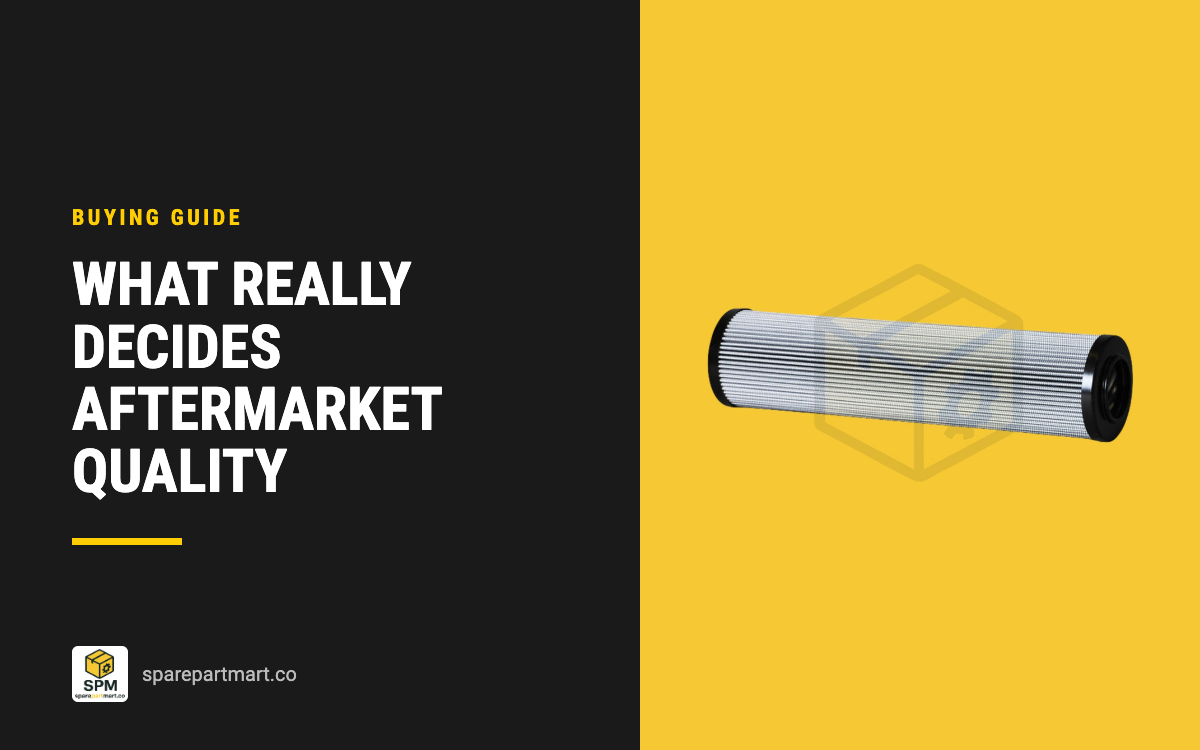
Where a filter is made tells you very little about whether it is any good. What tells you is the specification: the media, the filtration rating, the bypass setting, the pressure ratings and the dimensions. This guide explains what to check on any aftermarket part, wherever it comes from, and why we publish those figures on every listing.
How the industry changed
Before starting Spare Part Mart, Mike worked in his family's business, which sold, serviced and maintained CNC laser cutting machines for a Swiss manufacturer. At the time, machines and consumables from China were not part of the conversation. Precision equipment came from Europe, Japan or the United States.
That has changed. Many Western machinery and filtration brands now have parts made in China, by their own plants or by contract manufacturers. The same factories also produce aftermarket parts for the wider market. The country is no longer a useful shortcut for judging quality. You have to look at the part itself.
What decides the quality of a filter
The media. The media is what does the filtering. Inorganic microfibre (glass fibre) holds more dirt and keeps its efficiency as it loads. Impregnated paper is cost effective for coarser lube oil duty. Wire mesh is used for coarse and suction filtration. An aftermarket filter should use the same media type as the part it replaces. Of the 480 oil filter families in our catalogue, 179 use inorganic microfibre, 144 use impregnated paper and 71 use wire mesh.
The filtration rating. Quoted in microns (µm), it should match the original. A coarser rating lets wear particles through. A finer one clogs early and sends oil through the bypass valve.
The bypass valve setting. The bypass valve opens when the media is too restricted, so oil keeps flowing. Its opening pressure is a design decision and has to match the machine. A cheap filter with the wrong spring is one of the easiest faults to miss, because nothing looks wrong until the bearings wear.
Pressure ratings. Working pressure, burst pressure and element collapse pressure all need to meet or exceed those of the original part. These are measurable figures, and a manufacturer should be able to state them.
Dimensions and seals. Outer diameter, height, inner diameter and thread decide whether the part fits and seals. A part a few millimetres out can seal on the wrong face and leak under pressure.
End caps and construction. Look at the end caps, the centre tube and how the media pleats are bonded. A well-made element has evenly spaced pleats, end caps fully bonded to the media and no gaps where unfiltered oil can pass.
How to judge an aftermarket supplier
- Do they publish the specification? If a listing gives only a part number and a photo, you cannot check it.
- Do the figures match the original? Compare the media, rating, bypass setting and dimensions with the part you are replacing.
- Do they say where it is made? A supplier hiding the country of manufacture is hiding something else too.
- Do they label it honestly? An aftermarket part sold as genuine is a red flag about everything else.
- What happens if it is wrong? Check the returns policy before you order.
What we do
Our parts are made in China and we say so on every product page. Mike tests samples from each manufacturer before a part goes live, and parts are inspected at our consolidation warehouse before they ship. Each listing publishes the full specification and every cross-referenced part number we hold, so you can check the part against the one on your machine. More on how we source is in how we keep costs low.
Every order is covered by our 30-day money back guarantee. Browse our oil filters, air-oil separators and laser consumables, or read our guide on choosing the right oil filter.
